

This article is part of the October 2026 edition of the Syria Monthly Economic Digest. Click here to explore the full edition.
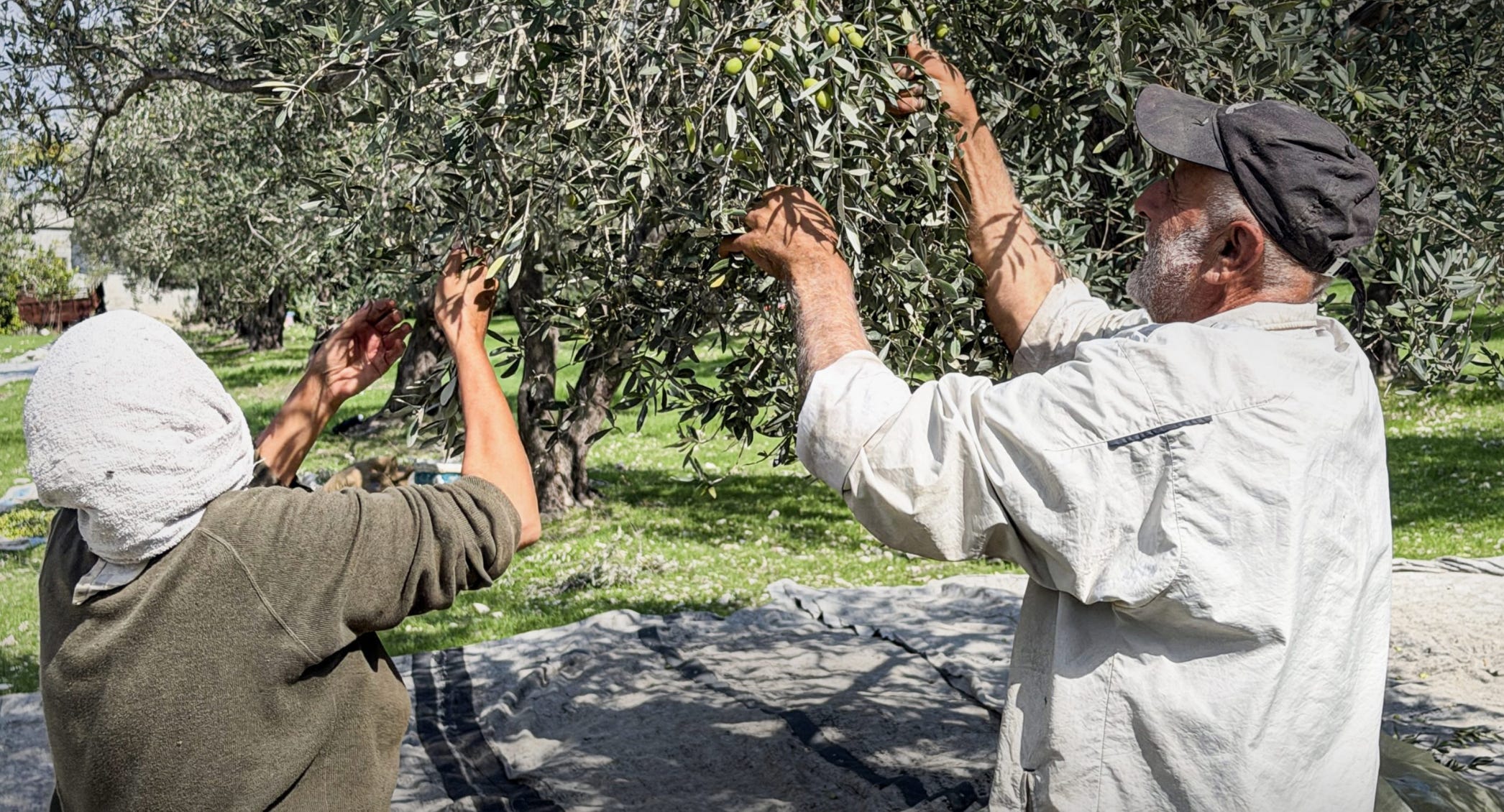
Key Developments: On October 21, the Ministry of Agriculture estimated the 2026 olive crop at 954,730 tons, from about 677,725 hectares. Of that, 763,784 tons are destined for pressing, which, at an assumed 25% yield, would give about 190,946 tons of oil.
Aleppo leads with about 226,300 tons of olives, followed by Idlib (156,800), Tartous (127,800), Latakia (121,100) and Hama (100,800). The head of the ministry’s Olive Office, Mohammad Qawwas, said any surplus could be marketed and exported once domestic consumption had been determined. He added that competing abroad would depend on quality rather than volume, meaning improving the whole chain from picking and transport to pressing, storage, laboratory testing, and branding.
The ministry had issued a circular on October 4 setting harvest and press-opening dates by region, with picking in Idlib, Khan Sheikhoun, Saraqeb, Maarat al-Numan and Harem due to start in early November. Idlib governorate capped pressing fees on October 19 at SYP 10 per kg of olives when the pomace (leftover pulp) goes back to the farmer, or SYP 2 when the press keeps it, or 5% and 3% of the oil if paid in kind.
In Afrin, where picking began on October 1, green olives sold for (new) SYP 70 a kg, down from SYP 150 last season, and a 16-kg tin of oil sold for USD 63, down from about USD 90. Traders advised growers to store their oil and wait for prices to recover within about four months, but growers said they needed cash to repay debts for ploughing, fertiliser, pruning and picking.
Nationally, olive specialist Ahmad Amiri put a tin of high-quality oil at about USD 70 in mid-October and expected it to fall further as new oil reached the market. He said new export companies had set up in every producing governorate this season, and that exports had peaked at about 50,000 tons before 2011. Export markets are crowded, however: a Syrian exporter said Gulf buyers were turning to cheaper Tunisian oil.
Under the former government, exports were tightly rationed, and after a ban imposed in September 2023, the Economy Ministry allowed licensed filtering and bottling firms to export 10,000 tons in October 2024. The new government has not yet announced its export rules for this season.
On production costs, a grower said he sprayed against aphids (a type of plant lice) four times and still lost part of the crop at flowering. An agricultural engineer attributed lower oil yields in some areas to summer heat and humidity, and Amiri said September’s diesel price rise had pushed up production costs. As for picking, most of it remains manual, with one worker gathering about 60 kg a day and earning an average of (new) SYP 1,000 (around USD 7) a day; women are paid differently from men, and most seasonal workers have no insurance or compensation if injured.

In Afrin, the harvest is also a test of the January 29 agreement between the Syrian Democratic Forces and the government in Damascus, under which about 10,000 displaced families have returned from Qamishli, Hasakah and Derik, with returnees already describing unemployment, falling construction wages and expensive fuel, having counted on the olive season to see them through.
Why It Matters: Despite the Ministry of Agriculture touting a windfall for the olive and olive oil sectors in 2026, the data show Syria is closer to recovery than a bonanza. At 954,730 tons, the crop is 2.3 times last year’s harvest, but it is below 2022’s and close to the 2003–2012 average of about 870,000 tons.
Furthermore, the olive oil estimate also leans on generous assumptions, since 190,946 tons of oil would amount to 20% of the whole crop, at the top of the historical range in CBS data and well above the 13% implied in the 2024 estimate, and in a year when engineers report lower extraction in some areas. At 2024’s yield, the same crop would give about 122,000 tons.
Another point to keep in mind when looking at this year’s harvest is that olive trees bear heavily in alternate years, so a large crop now likely means a smaller one next year, and export plans must account for this; export plans are built on this season’s surplus.
While most prices in Syria are rising, olive oil is getting cheaper, though this season the reasons are mostly domestic. World prices fell a year earlier, after Spain, the largest producer, recovered from two drought-hit harvests. Spanish output had dropped to 665,800 tons in 2022/23 and 852,600 tons in 2023/24, pushing extra virgin oil to a record €8.99 per kg in January 2024. When the 2024/25 crop recovered to 1.38 million tons, the price fell to about €3.93 by February 2025, and the IMF’s benchmark world price dropped 38% between 2024 and 2025. Syrian exporters felt it, with the average value of Syrian oil exports falling 19% over the same period (see charts below).
Since then, however, world prices have been broadly stable, rising about 5% between October 2025 and September 2026. The 30% fall in Afrin’s tin price this season therefore has more to do with conditions at home: a crop that has more than doubled after last year’s drought, growers who need cash to repay debts, and no export outlet yet to absorb the surplus. Growers are selling into that glut after a 40% rise in diesel prices, and on rough figures, picking alone takes about a quarter of the farm-gate price of green olives in Afrin.
At the policy level, it is worth noting that, despite the state government’s intentions to liberalise the economy and therefore withdraw from the market, the fee caps show that the state is, in fact, not stepping back. Yet, in this case, the interventions are among the government’s more defensible.
Indeed, given that olives must be pressed within a day or two of picking, queues at presses can stretch to days at the peak of the season, and the press owner controls the means of producing the oil; farmers cannot easily shop around. Thus, while capping fees in that position can be seen as Baathist price-setting, it is better understood as regulating a local, time-bound bottleneck.
The cap also prices pomace, which can also be used as fuel, administratively, with the gap between the two cash rates valuing pomace at SYP 8 per kilo of olives, at a time when costlier diesel is making pomace more valuable as fuel.
Olives and olive oil are another case study of a wider pattern in post-Assad economic policymaking. In January 2025, caretaker Trade Minister Maher al-Hassan (now chief executive of the Syrian Petroleum Company) promised an open, competitive market. Since then, the state has withdrawn wherever support costs money, as with its subsidy schemes, while continuing to intervene wherever intervention costs the treasury nothing. That runs from harvest dates to press fees, which are now set governorate by governorate in nominal pounds that lose value every week. The same inspectors who policed and enforced by the same kind of consumer-protection patrols whose caps, farmers complained, few presses respected in 2024
One question the government has yet to settle is whether it will allow olive oil producers to export. Under Assad, exports from government-held areas were tightly controlled: the government halted olive oil exports in September 2023 to hold down prices at home, and later allowed only 10,000 tons to be exported. Far more Syrian oil left the country through the north, from areas then outside government control. In 2024, Türkiye reported importing about 51,500 tons of olive oil from Syria, most likely from Afrin and Idlib, while all other countries together reported about 13,300 tons.
Continue Reading the October 2026 Syria Monthly Economic Digest


Explore Previous Editions
Browse every edition of the Syria Monthly Economic Digest, featuring monthly analysis of Syria’s political economy, governance, reconstruction, and regional developments.
Never Miss an Issue
Receive the Syria Monthly Economic Digest, along with original research, expert interviews, and in-depth analysis on Syria’s political economy, governance, and reconstruction—delivered directly to your inbox.