

This article is part of the October 2026 edition of the Syria Monthly Economic Digest. Click here to explore the full edition.
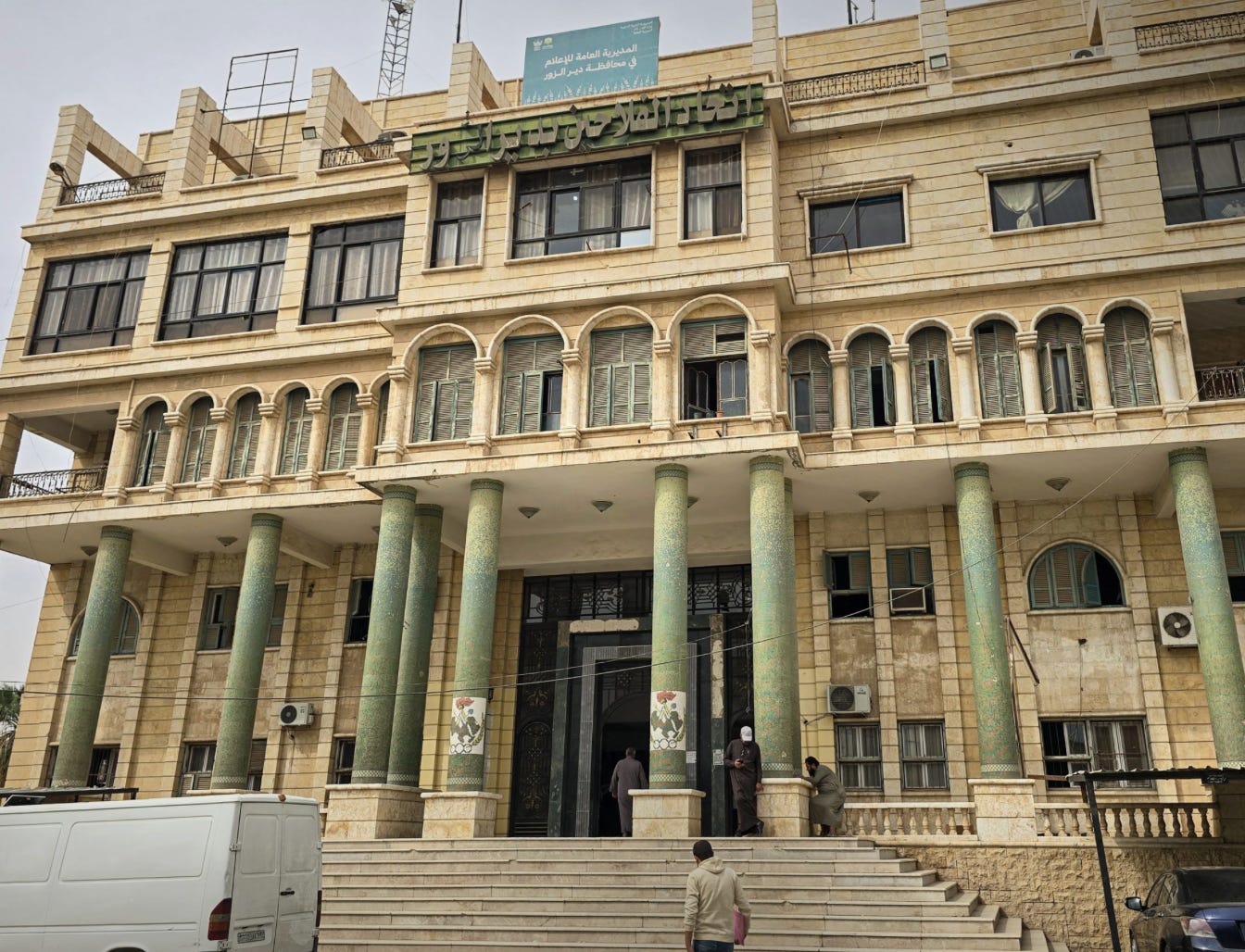
Key Developments: On October 21, the Agricultural Cooperative Bank (ACB) issued a circular, based on a Central Bank letter dated October 20, cancelling the payment mechanism set by the Central Bank Governor’s letter No. 17/944 of June 28, which the ACB had circulated on July 12. Under that mechanism, farmers owed more than SYP 1 million received their dues in three or four monthly instalments, depending on the amount, with a quarter paid through Sham Cash from August.
The circular came as Hasakah officials’ end-of-October deadline approached. An ACB official had put the share of Hasakah invoices paid during September at no more than 2%, and a large number of the governorate’s farmers were still waiting for their dues in late October. Payments were further along in the rest of the country. On October 5, an unnamed agricultural official revealed that about half of all grain dues had been paid nationwide. On October 14, the director of the ACB in Deir Ezzor, Mohammad al-Akl, said that 70–75% of the governorate’s dues had been paid. He added that the Central Bank’s supply of cash was “good” and that the rest would be paid by the end of the month, although farmers there were still asking to be paid in one go.

On October 20, a source at the ACB’s Hasakah branch said that, at the current rate of cash inflows, payment would take another four to five months. Branch director Azzo Hamed al-Ali denied setting any such timeframe that day and said the ACB’s head office was working with the Central Bank to secure liquidity. In Derik, the branch manager said on October 19 that larger transfers had arrived. He was still paying farmers who had delivered between June 29 and July 1, and hoped to finish within two months. In Raqqa, some farmers had received only a first instalment of about 25% of their crop’s value by early October.
Given the long delays in processing payments and the rapidly depreciating Syrian pound, any additional day of delay reduces the value of farmers’ dues, something critical given that dues are paid in pounds, while seed, fertiliser, labour, and most debts are priced in dollars. For example, Raqqa farmers said they had bought dollars at 138 to repay creditors (see “[TBA-link: October currency entry]”), with one expert saying some farmers had sold wheat to traders below the official price to be paid at once.

Beyond last year’s dues, the next harvest is also at risk, given the cost of inputs farmers have to buy, mostly in dollars, while their wheat money is still held up and the planting season has already begun.
In Hasakah, soft-wheat seed sold at about USD 375 a ton and durum at USD 400, plus USD 25–50 a ton for cleaning and treatment. Ploughing cost USD 3–4 or (new) SYP 200–400 a dunum, with tractor owners paying (new) SYP 175 a litre for diesel. One farmer cut his seed rate to 15 kg a dunum to stretch what he had. Farmers said the ACB had not supplied the nitrogen and potash fertiliser they usually received through it, leaving them to markets where nitrogen sold at about USD 65 a bag and superphosphate at USD 30, some of it smuggled and of uncertain quality. The General Organisation for Seed Multiplication produces about 50,000 tons of wheat seed against the annual needs of 340,409 tons. In Kobani, farmers said no agricultural diesel had been distributed this year, unlike under the Autonomous Administration. By late October, only about 10% of farmland had been planted, Welat TV reported, with ploughing at about USD 100 a hectare.
Cotton growers face the same uncertainty. On October 28, Hasakah agriculture director Hayel al-Kalash said the purchase price was “still under study” and that no decision had been taken on how the crop would be marketed, pending instructions from the General Establishment for Cotton Ginning and Marketing. He noted that collection centres had opened in Raqqa and Deir Ezzor and gins in Aleppo and Hama. That came almost three months after the ministry announced a price of (new) SYP 85 per kg.

Why It Matters: The new circular makes clear who will wait longest for their money. Farmers in nine governorates, most of which delivered relatively little wheat, are to be paid everything at once. Deir Ezzor, which had already paid out most of its dues by mid-October, gets a fixed deadline. Hasakah, which supplied 42% of the country’s wheat this season, and Raqqa are to be paid in instalments, with no end date set.
At SYP 55,000 a ton, Hasakah alone is owed about (new) SYP 64 billion out of roughly SYP 151 billion nationally (USD 1.1 billion at the current back market exchange rate), so paying it in full at once would have required a large release of cash, something which might be both difficult logistically speaking (i.e. moving cash to the northeast), but also potentially disruptive for the currency market. This thinking maps exactly onto what the Central Bank has done elsewhere: limiting the amount of pounds in circulation to protect the currency, as it has with bank withdrawals (see “[TBA-link: October currency entry]”).
The flip side of this policy, however, is that wheat farmers have, in effect, become one of the Central Bank’s tools, lending the state their harvest money interest-free while the pound loses value.
As explored in previous issues of the Monthly Digest, the current wheat debacle matters politically for the future of the northeast integration. This was the first harvest that most northeastern farmers sold to Damascus rather than to the Autonomous Administration, and Kobani farmers already compare the new arrangements unfavourably with the old ones, under which diesel and seed arrived on time.
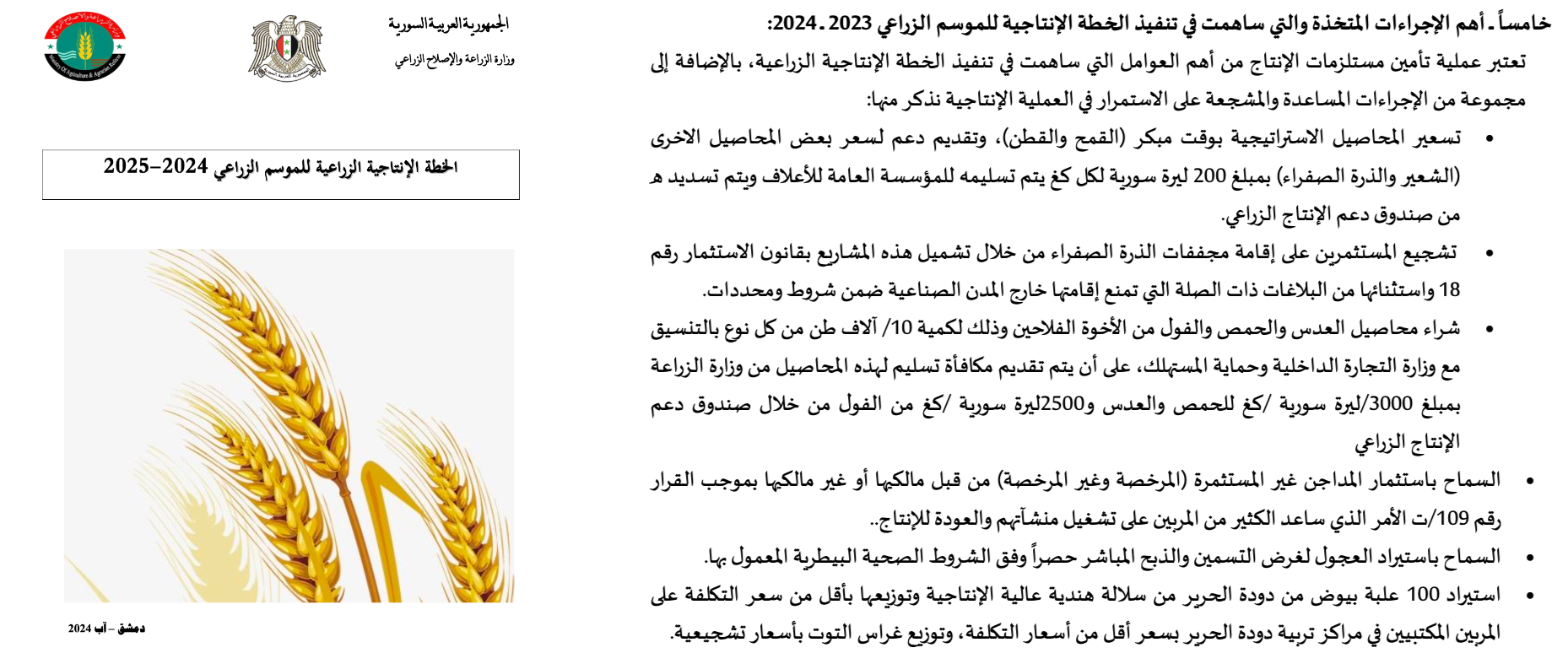
These last two factors, beyond delayed payments, will also prove critical for next year’s seasons, as per the Ministry of Agriculture’s own indirect admission. According to the Ministry’s own 2024–25 production plan, accessed by The Syria Dispatch, it credited the previous season’s results partly to early pricing of wheat and cotton, seed sold below cost, and diesel allocated to every planted field. This year, none of the three seems to be ready for planting, which starts in October.
The early signs match what we expected in September, when we argued that cash-short farmers would cut back on inputs rather than on the area they plant. One Hasakah farmer cut his seed rate by a quarter; fertiliser of uncertain origin is filling the gap left by the bank; and seed establishment covers only about 15% of national seed needs, so most farmers are sowing their own or market seed. Kobani, where only about a tenth of the land had been planted by late October, shows that the planted area can shrink too where high costs and payment delays combine.
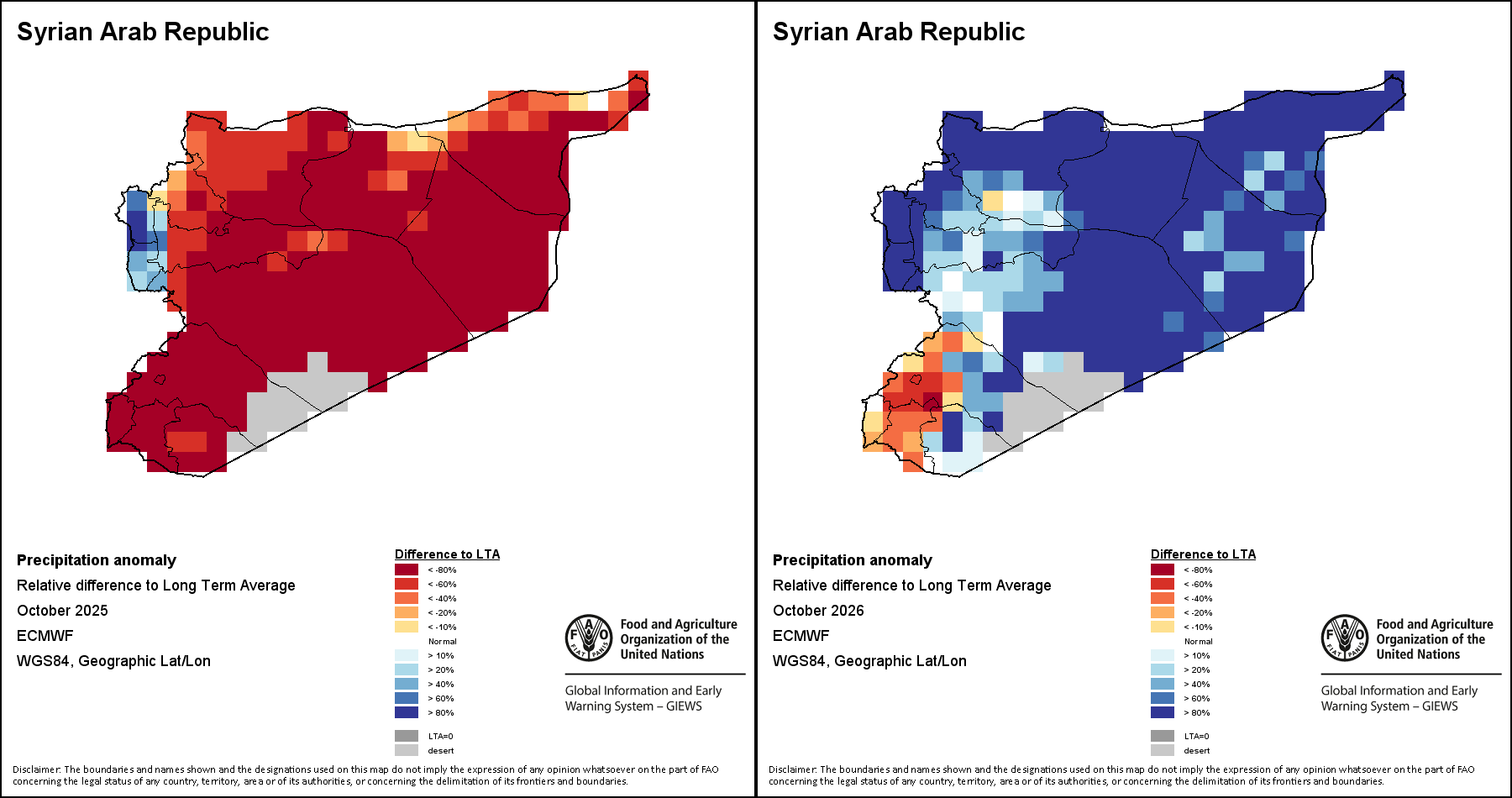
Good early rain across the country may hide much of this until the harvest, as it did this year. October rainfall was about 60% of the long-term average for most of the country, but historically it has said little about the rest of the season given that October brings only 3–6% of a season’s rain, and in satellite estimates since 1989 its link with November–April rainfall is too weak to count on. Last season shows why: Hasakah had one of its driest Octobers on record before a winter that produced a record harvest.
Continue Reading the October 2026 Syria Monthly Economic Digest


Explore Previous Editions
Browse every edition of the Syria Monthly Economic Digest, featuring monthly analysis of Syria’s political economy, governance, reconstruction, and regional developments.
Never Miss an Issue
Receive the Syria Monthly Economic Digest, along with original research, expert interviews, and in-depth analysis on Syria’s political economy, governance, and reconstruction—delivered directly to your inbox.