

This article is part of the May 2026 edition of the Syria Monthly Economic Digest. Click here to explore the full edition.
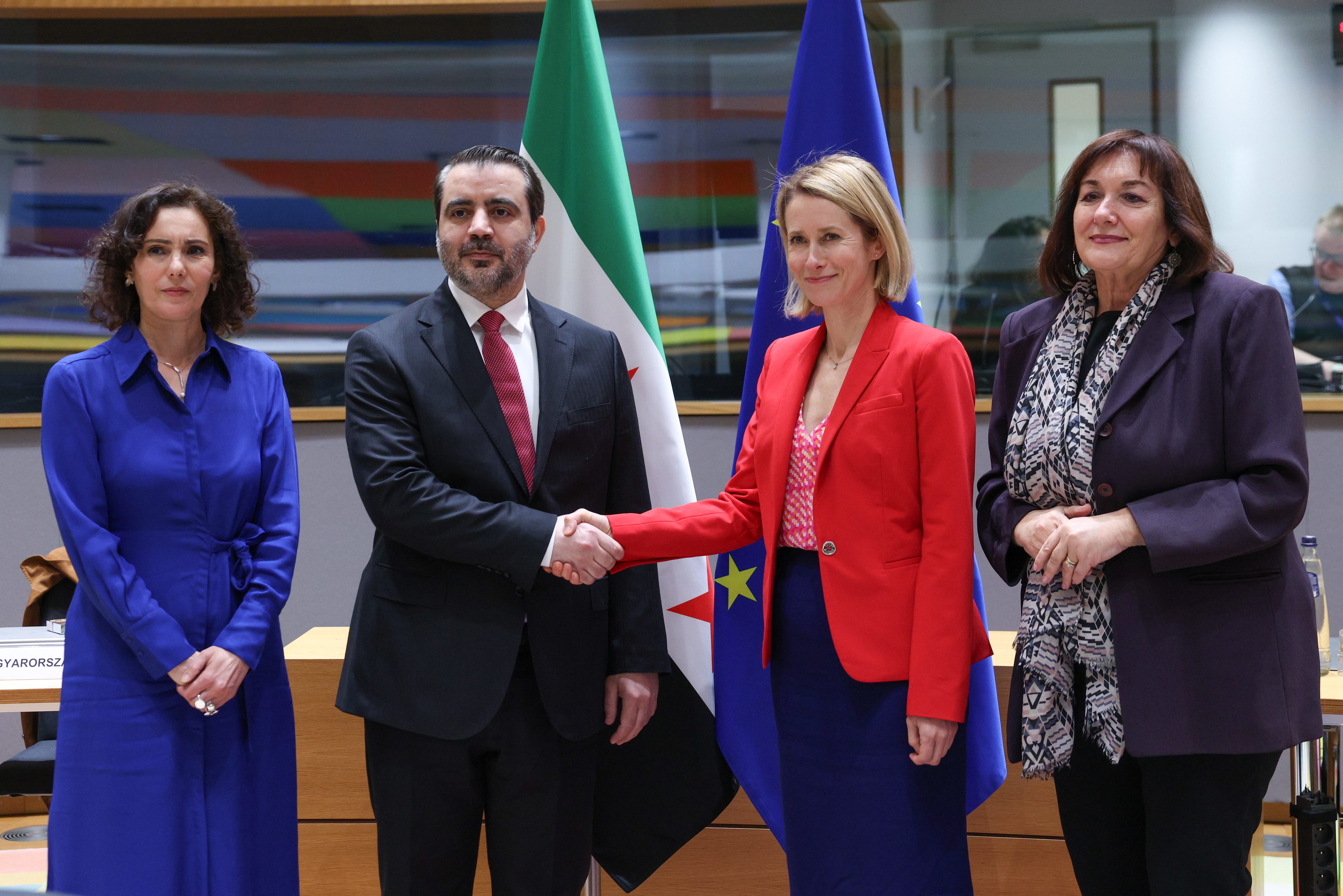
Key Developments: On May 11, Syria and the EU held their first High-Level Political Dialogue in Brussels, co-chaired by Syrian Foreign Minister Asaad al-Shaibani and EU High Representative Kaja Kallas. The meeting focused on EU–Syria relations, regional stability, Syria’s inclusive political transition, socio-economic recovery, and reconstruction. It took place alongside the Syria Partnership Coordination Forum, co-chaired by al-Shaibani and EU Commissioner for the Mediterranean Dubravka Šuica, with EU Member States, G7 countries, Arab states, the UN, and major financial institutions in attendance.
The EU announced work on a EUR 15 million Technical Assistance Hub to support Syrian institutions, a EUR 14 million contribution to rehabilitate Al-Rastan Hospital in Homs, and preparations for the additional EUR 280 million in socio-economic support for 2026–2027. The dialogue also coincided with a major legal step: the EU Council restored the full application of the 1977 EU–Syria Cooperation Agreement, ending the partial suspension imposed in 2011 and reopening the agreement’s trade and economic-cooperation framework.
The month also showed that Syria’s re-engagement with Europe is expanding beyond Brussels. Syrian President Ahmad Al-Sharaa had joined a European Council summit with regional partners in Cyprus in late April, where discussions focused on the Middle East, the EU’s southern neighborhood, and regional security. Sources say he used the meeting to present plans for Syria to become a regional transit and energy corridor, an argument Damascus is expected to repeat in upcoming G7 discussions, which Syria will attend as a guest nation.
At the same time, the EU maintained its conditional approach. Syrian activists and MEPs urged Brussels to link deeper engagement to human rights, accountability, minority protection, and an inclusive transition. On May 25, the EU Delegation to Syria also published its updated Roadmap for Engagement with Civil Society, stressing the need for adaptive and sustained support to Syrian civil society, which it described as central to community resilience, advocacy, dialogue, and participation. Separately, the EU renewed targeted sanctions against individuals and entities linked to the former Assad regime until June 1, 2027, while delisting seven entities, including the Ministries of Defense and Interior.
Why It Matters: The High-Level Political Dialogue confirms that EU policy toward Syria is moving from containment to structured re-engagement, but not to unconditional normalization. Restoring the Cooperation Agreement and launching formal political dialogue reopen channels that had largely collapsed after 2011. Yet the renewal of targeted sanctions and the publication of the civil society roadmap show that Brussels still wants engagement to remain tied to inclusion, accountability, and institutional reform.
For Damascus, the stakes are practical. Europe offers technical assistance, reconstruction financing, trade normalization, regulatory support, and political legitimacy. Syria is also trying to reposition itself not only as a recovery file, but as a strategic connector between the Gulf, Iraq, Turkey, the Mediterranean, and Europe. The transit-hub argument is useful because it gives European governments a reason to see Syria as part of their energy, logistics, and supply-chain calculations, not only as a source of refugees or instability. But it remains more a strategic pitch than a delivered reality: pipelines, ports, borders, electricity links, customs systems, security guarantees, and financing all still need to be made functional.
For the EU, Syria is now tied to migration management, refugee returns, counterterrorism, regional stability, energy security, and influence in the Eastern Mediterranean. This gives Damascus leverage, but also puts it under assessment. The coming test is whether both sides can move from political signaling to operational cooperation: credible institutions on the Syrian side, usable instruments on the EU side, and enough delivery on services, infrastructure, civil society participation, and economic governance to make re-engagement visible beyond diplomatic meetings.
Continue Reading the May 2026 Syria Monthly Economic Digest


Explore Previous Editions
Browse every edition of the Syria Monthly Economic Digest, featuring monthly analysis of Syria’s political economy, governance, reconstruction, and regional developments.
Never Miss an Issue
Receive the Syria Monthly Economic Digest, along with original research, expert interviews, and in-depth analysis on Syria’s political economy, governance, and reconstruction—delivered directly to your inbox.