

This article is part of the May 2026 edition of the Syria Monthly Economic Digest. Click here to explore the full edition.
Key Developments: Syria’s electricity sector continues to see localized improvements, although supply remains uneven across regions. In Aleppo, electricity returned gradually to parts of the eastern city after around nine years of interruption, following the opening of four transformer centers in al-Shaar, benefiting roughly 15,000 residents. The Ministry of Energy also said it had carried out transmission, distribution, and maintenance works across several regions, including restoring electricity to Hurran in rural Maarat al-Numan after 13 years, raising supply in 286 villages around Qamishli from one hour to more than eight hours per day, and bringing electricity back to 35% of Qamishli city after a two-year outage. Separately, the Jandar power plant in Homs reportedly reached full production capacity for the first time in nearly a decade, rising from around 200 MW before the transition to 825 MW after maintenance works.
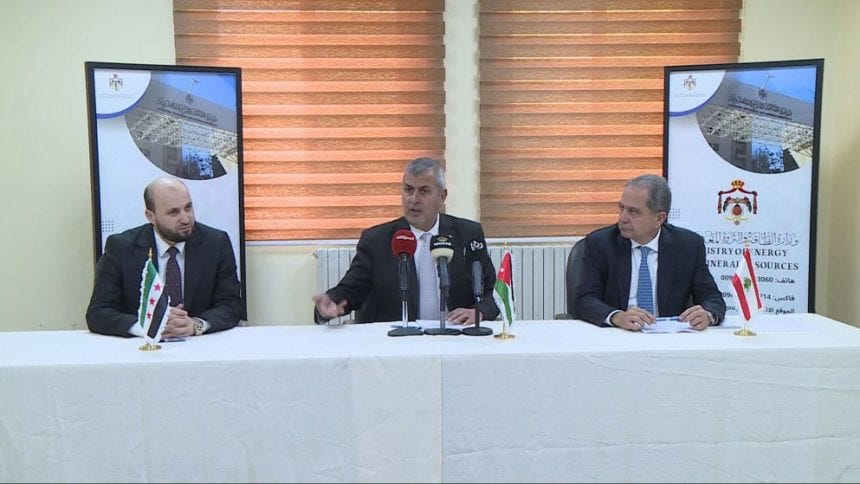
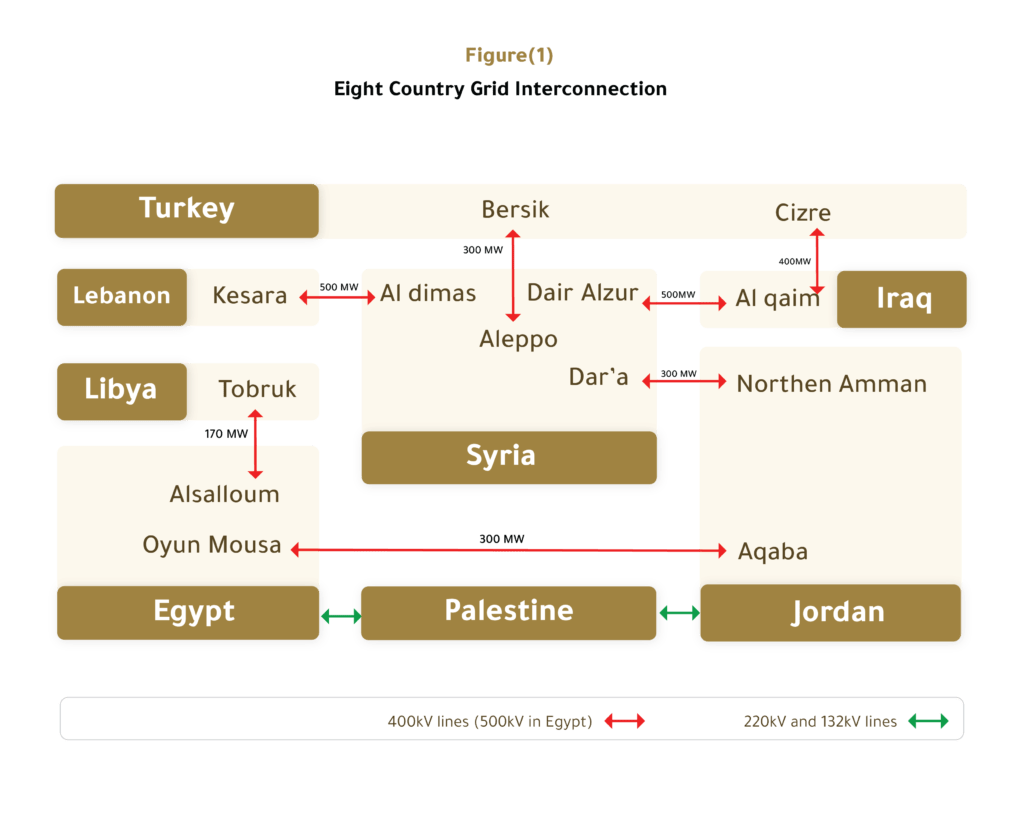
Regional electricity interconnection also returned to the policy agenda. In Amman, the Syrian, Jordanian, and Lebanese energy ministers discussed advancing electricity interconnection and related technical work, with Syrian Energy Minister Mohammad al-Bashir saying Syria was working to rehabilitate power links with Jordan and Lebanon. Syria plans to restore transmission lines with Jordan and maintain four interconnection lines with Lebanon, which officials described as technically ready on both sides. Furthermore, Lebanon’s energy minister later said Beirut was considering buying electricity directly from Syria, while work continues on the wider Jordan–Syria–Lebanon interconnection, which he said could take around one year to rehabilitate.
Despite these improvements, electricity remained a source of pressure for households and industry. In Aleppo, industrialists reported electricity bills reaching millions of Syrian pounds after industrial tariffs rose to SYP 1,700 per kWh (+/- USD 0.13) for factories requiring continuous supply, while some industrial areas still received only around 12 hours of power per day. Separately, legal challenges against the October 2025 tariff increase continued in Syrian courts, with hearings delayed into June. In Idlib, local sources also reported new tariff increases by the Turkish private company Green Energy, alongside recurring evening outages.
Why It Matters: The Syria–Jordan–Lebanon electricity track reopens an old regional interconnection file that had long been technically plausible but politically difficult. Jordan and Syria have been linked through a 400 kV transmission line since 2001, but suspended in 2012. The 2022 plan to transmit Jordanian electricity to Lebanon via Syria stalledover financing, infrastructure damage, and sanctions-related complications. With Syria now re-engaging diplomatically, sanctions barriers reduced, and Lebanon still facing severe power shortages, using Syria as an electricity corridor has become more practical again.
Domestically, supply is improving from a very low base. Better electricity in Damascus, Aleppo, Qamishli, Raqqa, Deir Ezzor, and other areas matters because power remains one of the main constraints on recovery. A more reliable supply reduces dependence on private generators, lowers operating uncertainty, and allows households, workshops, and factories to operate for longer hours. Politically, restoring electricity to long-neglected areas and places only recently brought under central government control also helps the state reassert itself through service delivery, especially in eastern and northeastern regions where authority and infrastructure were fragmented during the war.
The risk is that improved availability is being paired with higher tariffs before reliability is fully restored. The recent tariff reform may help reduce subsidy pressures and improve sector finances, but it also raises production costs for manufacturers, food processors, textile producers, metal workshops, and other energy-intensive activities. If firms pass these costs on, consumers face higher prices; if they cannot, margins narrow and production remains constrained, with the labor market also potentially being affected.
Continue Reading the May 2026 Syria Monthly Economic Digest


Explore Previous Editions
Browse every edition of the Syria Monthly Economic Digest, featuring monthly analysis of Syria’s political economy, governance, reconstruction, and regional developments.
Never Miss an Issue
Receive the Syria Monthly Economic Digest, along with original research, expert interviews, and in-depth analysis on Syria’s political economy, governance, and reconstruction—delivered directly to your inbox.