

This article is part of the May 2026 edition of the Syria Monthly Economic Digest. Click here to explore the full edition.
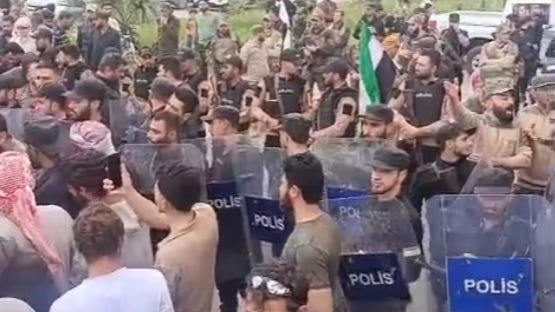
Key Developments: The Syrian Petroleum Company’s (SPC) decision to close primitive oil refineries/burners, known locally as “harraqat”, in Tarhin near al-Bab in rural Aleppo, triggered protests by owners, workers, and traders in late May. Protesters argued that the facilities had operated for years under previous local arrangements, supplied fuel to northwestern Syria during the conflict, and supported thousands of direct and indirect livelihoods. Internal security forces prevented demonstrators from reaching Saadallah al-Jabiri Square in Aleppo on May 20, while other reports said tensions escalated in Tarhin as security forces moved to enforce the dismantling.
SPC and the Ministry of Energy defended the closures on legal, health, environmental, and technical grounds, saying the haraqaat were illegal, unsafe, highly polluting, and produced fuel that did not meet Syrian specifications. The SPC gave owners two options: sell the metal structures to the company at “incentive” prices or keep them, provided they signed a pledge not to use them again in any oil-related activity. The company also began interviews to place haraqaat workers at formal oil facilities and to settle outstanding financial dues owed to owners, while SPC later welcomed a pledge by Hemco Minerals and Fuels to remove its own primitive refineries in Aleppo.
Why It Matters: The makeshift oil refineries emerged because the formal fuel supply collapsed during the conflict, and in places such as Tarhin, they became a full local economy: supplying diesel to generators, bakeries, water pumps, agriculture, and transport, while providing work for displaced families with few alternatives. This is why the closure is socially sensitive. The government’s argument is rational: primitive refining is unsafe, polluting, technically inefficient, and outside formal fuel regulation. Still, the sector had been tolerated, taxed, organized, or indirectly managed by successive local authorities for years, creating expectations of recognition, compensation, or gradual transition.
Shutting down the haraqaat is part of a necessary post-war normalization of the oil sector: centralizing crude flows, ending low-quality refining, reducing waste, improving safety, and returning fuel processing to formal infrastructure. But if the state closes these facilities without a credible livelihood plan, the risk of social unrest is real, as seen in these early demonstrations.
Similar tensions to those in Aleppo appeared earlier in Deir Ezzor. In February 2026, Damascus ordered the closure of informal refineries, and workers protested almost immediately, arguing that the decision threatened surrounding livelihoods. While the SPC seems to be keen on absorbing workers into formal oil facilities, workers said the job offers lacked clarity on salaries, contracts, locations, and guarantees.
Continue Reading the May 2026 Syria Monthly Economic Digest


Explore Previous Editions
Browse every edition of the Syria Monthly Economic Digest, featuring monthly analysis of Syria’s political economy, governance, reconstruction, and regional developments.
Never Miss an Issue
Receive the Syria Monthly Economic Digest, along with original research, expert interviews, and in-depth analysis on Syria’s political economy, governance, and reconstruction—delivered directly to your inbox.