

This article is part of the May 2026 edition of the Syria Monthly Economic Digest. Click here to explore the full edition.
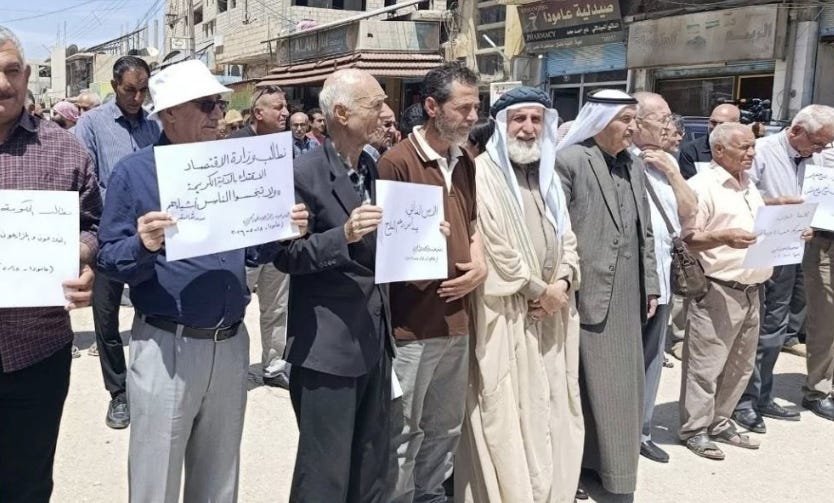
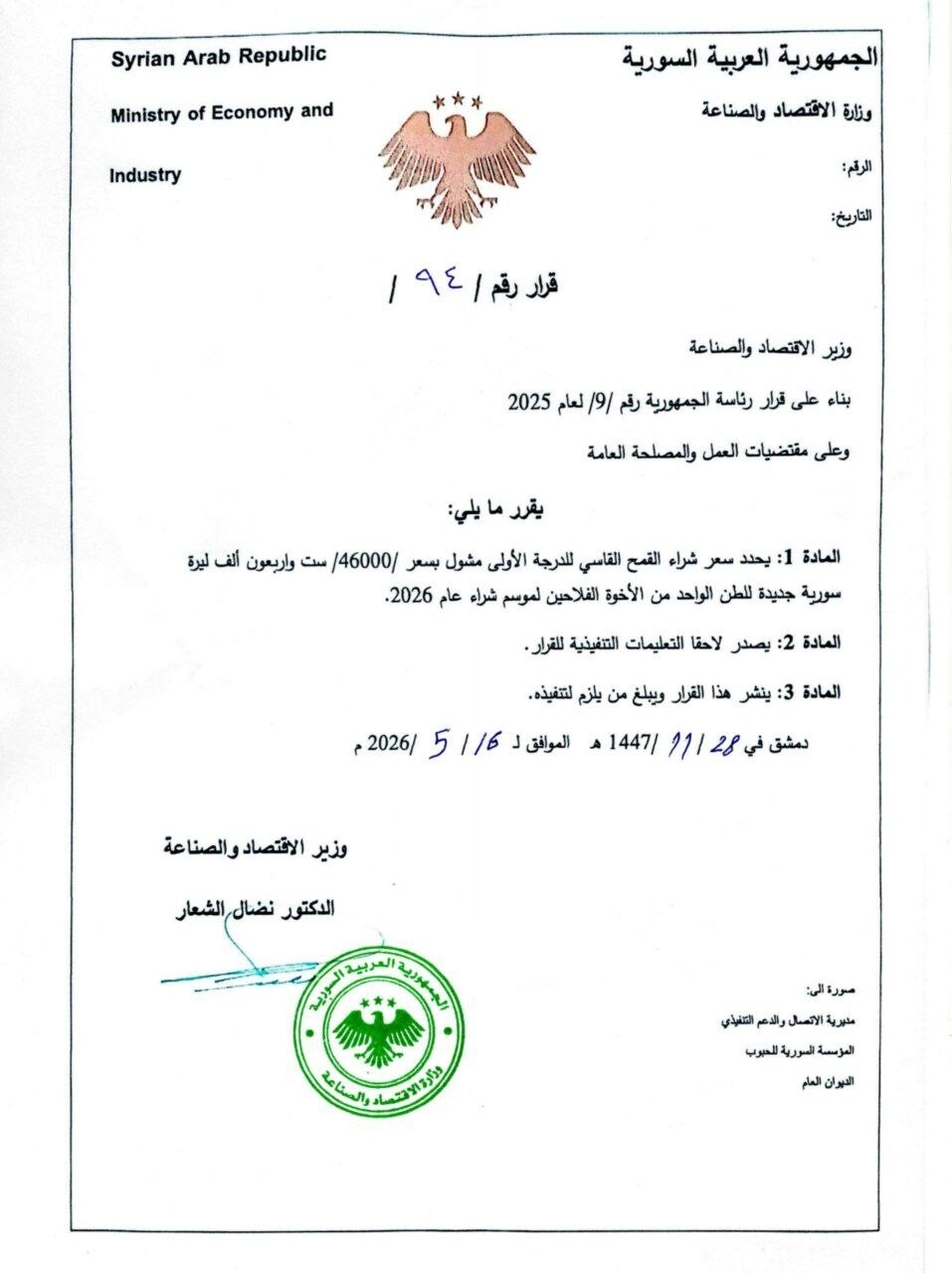
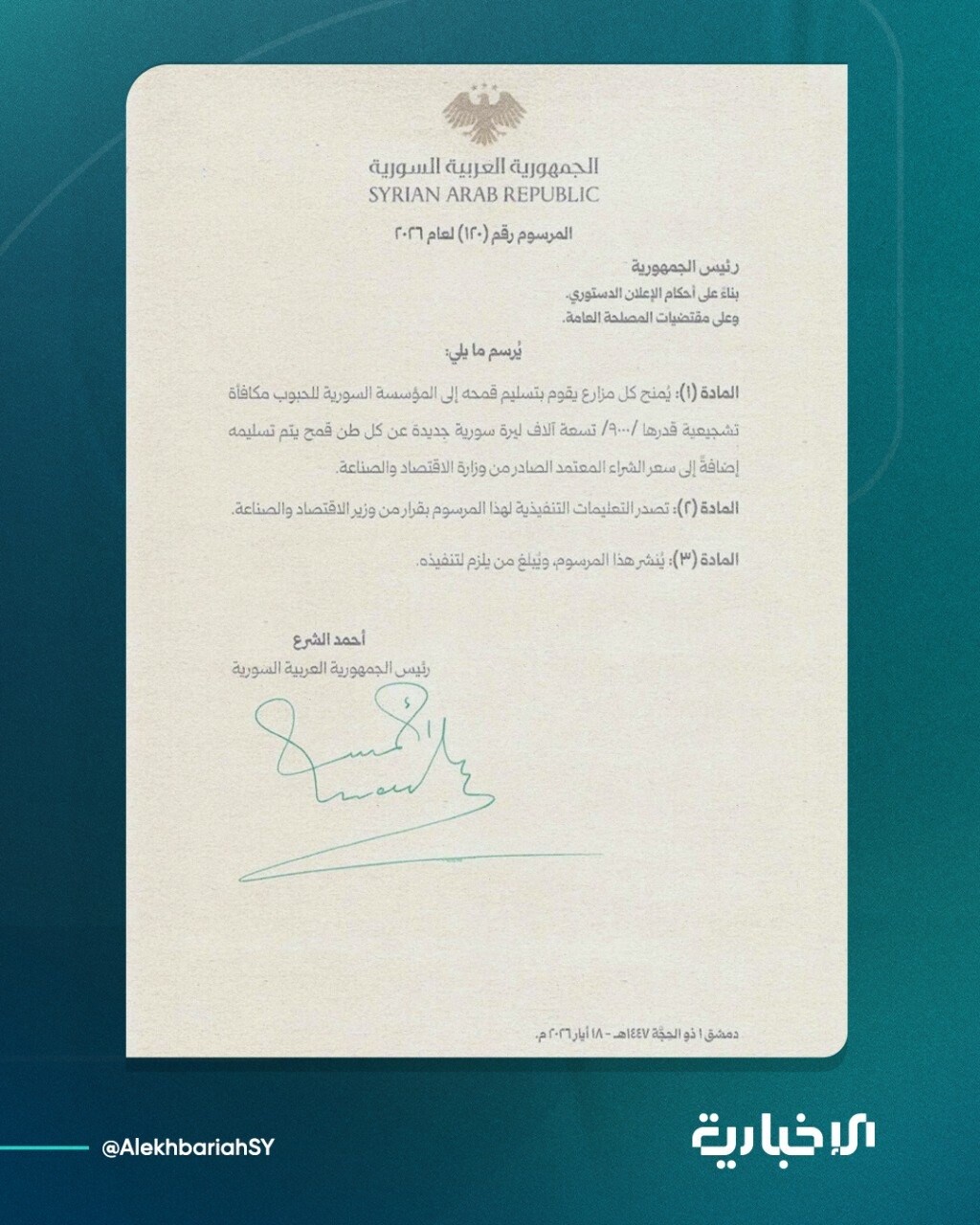
Key Developments: Syria’s 2026 wheat season became a major policy issue after the Ministry of Economy and Industry set the purchase price for first-grade durum wheat at (new) SYP 46,000 per ton (+/- USD 333), triggering farmer protests in several wheat-producing areas. Farmers and residents protested in Raqqa, Deir Ezzor, Hasakah, Hama, and other agricultural areas, arguing that the price did not reflect higher costs for fuel, seeds, fertilizers, harvesting, transport, and sacks. Al-Modon also reported that some farmers threatened to withhold deliveries to state institutions if the price was not revised. In reaction, President Ahmad al-Sharaa issued, on May 21, Presidential Decree No. 120 of 2026, granting wheat farmers an additional (new) SYP 9,000 per ton (+/- USD 65) delivered to the Syrian Grain Establishment, on top of the official purchase price. This raised the effective state purchase price to (new) SYP 55,000 per ton.
The government also moved to prepare procurement and payment channels for the harvest. The Syrian Grain Establishment said it had raised storage capacity to around 1 million tons, was preparing 15 new sites in Hasakah, Raqqa, and Deir Ezzor, and planned to expand its marketing and intake centers to nearly 80. The Agricultural Cooperative Bank separately said that 106 branches were being prepared to pay farmers’ grain dues, except for 24 branches in Hasakah and Raqqa, where payments would be redirected to nearby operational branches.
The season unfolded against a mixed agricultural backdrop. Heavy rainfall improved vegetation and water availability after a significant drought during the preceding season, but also caused flooding, damage to farmland, and disruption to infrastructure in several areas.
Why It Matters: Syria relies on a state-led foodgrains procurement model in which the government buys wheat from farmers through official grain institutions to secure flour supplies, bread availability, and strategic reserves. The stakes were especially high after two weak seasons and a severe drought. The FAO had forecast Syria’s wheat import requirement for the 2025/26 marketing year at around 3 million tonnes, nearly 70 percent above the five-year average, while it was previously reported that domestic production had fallen far below national consumption needs in 2025.
These protests are noteworthy for their scale, their status as a nationwide mobilizing issue, and for showing that farmers potentially represent a significant bargaining force in the post-Assad transition. The initial price increases triggered demonstrations in half of Syria’s governorates, with some farmers threatening to withhold grain from state institutions. The controversy also highlighted a consultation problem: farmers’ representatives argued that the price had been set without sufficient participation by farmers’ unions or local producers, despite sharp regional cost differences.
This controversy is indicative of a broader problem in the local production-cost structure. Farmers argued that fertilizer, diesel, pesticides, harvesting, sacks, and transport costs had risen sharply, with some inputs effectively priced in dollars while the state purchase price was set in Syrian pounds. Farmers pointed to high costs for diesel, fertilizer, irrigation, harvesting, and transport, while others noted a discrepancy between the state’s wheat seed price of around USD 500 per ton and the initial crop purchase price of about USD 330 per ton. Farmers also explained that a single national procurement price also fails to reflect regional differences, especially in eastern governorates, where irrigation costs can be structurally higher than in rain-fed or better-served areas.
Continue Reading the May 2026 Syria Monthly Economic Digest


Explore Previous Editions
Browse every edition of the Syria Monthly Economic Digest, featuring monthly analysis of Syria’s political economy, governance, reconstruction, and regional developments.
Never Miss an Issue
Receive the Syria Monthly Economic Digest, along with original research, expert interviews, and in-depth analysis on Syria’s political economy, governance, and reconstruction—delivered directly to your inbox.